Framework 3 : Moments of Truth & behavioural drivers - Case Studies from Netflix, Amazon & LinkedIn

Tom Burrell
January 28, 2026

🧠 What this is:
A framework for identifying key moments in the relationship that make or break retention and strategies to fix them.
👤 Who it’s for:
Enterprise leaders carrying the retention number, CCOs, CMOs, and commercial heads, with cross-functional pressure.
📈 What it does:
Shows where and how to maximise retention outcomes by optimising key moments across the lifecycle.
Executive Summary
Retention is not driven by continuous satisfaction.
Customers don't care all the time.
They care sometimes.
Retention is driven by how customers feel and behave at a few emotionally charged moments of truth.
Across all recurring revenue business there are four key reasons customers leave:
I don't feel value fast enough
I feel guilty because I am paying for this, but not using it
This is not exciting anymore
I don't feel valued
Moments of truth happen before these behavioural drivers are felt.
If any or multiple moments of truth are handled poorly, customers feel disconnected from the brand and ultimately leave.
If moments of truth are handled well, they can mitigate and even eliminate the feelings that lead to defection, thereby resulting in long-term customer retention.
Before we dive in, it is worth noting that these behavioural drivers have varying levels of impact across different recurring revenue sectors.
For example, in telecommunications, most churn is typically concentrated around 4. I don’t feel valued (assuming network and product quality are confirmed).
In subscription boxes, 1 and 3 are critical.
In gambling and gyms, 1, 3 and 4 are the most important.
In B2B SaaS, 1, 2, and 4 are often important.
In subscription e-commerce, 3 and 4 are often the most important.
In subscription apps, publishing, membership communities and streaming, all four behavioural drivers are important.
In this framework, we take a lifecycle lens to moments of truth, with multiple examples from diverse industries to illustrate the concept.
A Lifecycle Lens to Moments of Truth
Moments of truth occur when a customer consciously or subconsciously resolves one of the four behavioural questions above.
When viewed through a lifecycle lens, these behavioural drivers tend to show up as the following patterns:
I don’t feel value fast enough → Early-life value realisation
I feel guilty because I’m paying but not using it → Engagement and usage friction
This is not exciting anymore → Novelty decay
I don’t feel valued → Recognition, service, and fairness
Each of these maps to specific customer lifecycle stages.
Lifecycle Stage | Behavioural Driver |
Activation & early life | I don’t feel value fast enough |
Engagement | I feel guilty because I’m paying but not using it |
Mid-life | This is not exciting anymore |
Service, billing, renewal | I don’t feel valued |
The key point is this: lifecycle stages are not moments of truth.
Moments of truth occur within lifecycle stages.
In the remainder of this framework, we will explore each of these stages, dominant moments of truth and examples from Netflix, LinkedIn and Amazon.
Early Life Moments of Truth
The behavioural driver for defection at this lifestage is:
I don’t feel value fast enough
So, of course, the goal at this stage is to help the customer realise value.
Examples of moments of truth within this lifestage include:
The first time an app is opened
The sign-up journey
The customer onboarding journey/welcome series
The first time a customer achieves success
At this early stage, brands must avoid the intention-activation gap, that is, the gap between the intention the customer had for how your product could fit in their life and the reality. Your job is to close that gap.
You close that gap by reaching an activation threshold, that is, the moment in early life when product engagement/success becomes embedded. At this point, your early life program has worked.
The Jobs-to-Be-Done model developed by Clayton Christensen is critical to understand here.
This framework explains that people don’t buy things for what they are; they buy them to achieve a goal.
You don’t buy an umbrella because you love umbrellas; you buy it because you want to stay dry.
It is equally critical to understand how these jobs-to-be-done vary by customer cohort and that your early-life experience must support differentiated objectives for each customer type.
NETFLIX CASE STUDY:
Netflix has 184 billion hours of content on the platform. Great right?
Well, it is, but it's also a problem because too much content leads to doom scrolling, which is the single biggest reason customers leave Netflix.
Netflix has a brilliant personalisation engine, but the stage in the lifecycle where personalisation matters most is also the time when Netflix knows the least.
So in the third step of the signup flow, Netflix asks customers to pick three shows they like.
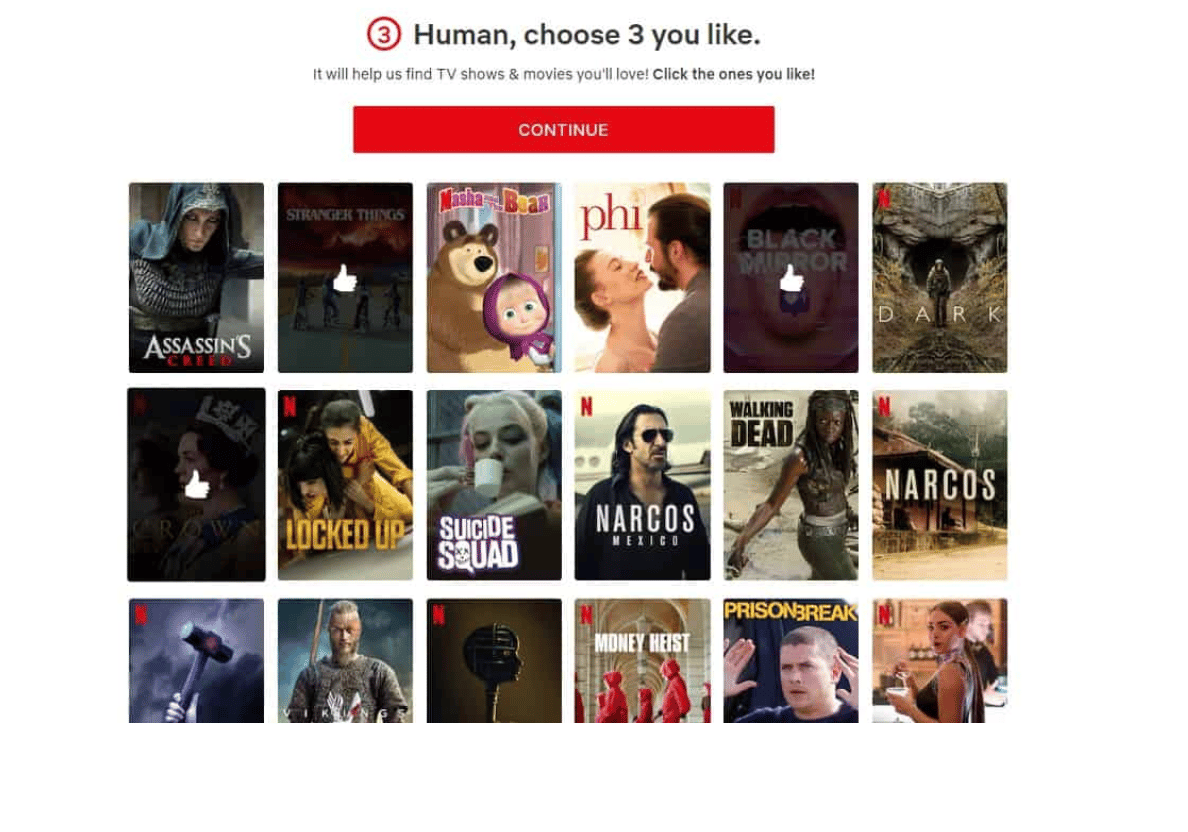
The answers customers give are highly predictive of the content they will enjoy across the entire Netflix portfolio, such that when they land on the product, the most important moment of truth, browsing content for the first time, is highly relevant.
LINKEDIN CASE STUDY
Another key strategy in early life is to leverage behavioural science-based nudge theory.
When you first join LinkedIn, you see a wheel showing your profile completion percentage.
This wheel keeps nagging you until you complete it to 100%.
The benefit for you as a user is that you get more value from the platform, and the benefit for LinkedIn is that you are more entrenched because you are leveraging a richer suite of functionality within the product.
LinkedIn have nudged you to the activation threshold.
I went deeper into the Netflix Golden Question in episode 67 and outlined 6 principles of customer onboarding in episode 4.
Usage Moments of Truth
The behavioural driver for defection at this moment is:
I feel guilty because I am not using this
But by the time a customer reaches this point, it is often too late.
Why? Because guilt creates negative feelings towards the brand, when a customer feels negative, it pushes them further away.
So, of course, the goal at this stage is to encourage product usage before the customer reaches this moment.
There are three types of moments of truth that get in the way of usage:
Product friction
Failed value realisation moments
Momentum loss
The sectors in which this behavioural driver is most relevant include streaming, publishing, subscription apps, B2B SaaS, gyms, and learning platforms.
If you want to maintain customer engagement in a recurring revenue context, reducing friction is critical. Moments of friction could be things like
Difficulty logging in
Difficulty resuming the previous session
Decision-fatigue, like too many steps to complete an action
Lack of pause, downgrade, or delivery alteration pathways
Amazon has enabled auto-login and one-click ordering for decades, and it's one of the key reasons for its growth. This is an excellent example of friction reduction driving increased usage.
Failed value realisation moments are things like:
Not easily finding the context you want in your streaming or publishing app
Not easily finding the market you want on your betting app
Bonuses or offers feeling overly complex or restrictive on your igaming app
Not being inspired by the meals on offer in your meal kit subscription
Feeling lost in the gym
Overwhelm in your B2B SaaS app when trying to use enhanced features
Failed value realisation is typically addressed through cohort-relevant personalisation and clear messaging across product and CRM marketing.
Momentum loss is typically resolved via gamification and CRM Marketing.
In episode 40, I went deep on Duolingo who have really mastered gamification.
However, sometimes, depending on the context, gamification can backfire, for example, in the gym world, regularly prompting the customer to return after missed sessions can actually create the feeling of “I feel guilty, I’m not using this”.
So, again, it is important to understand the customer and in this context, particularly their experience of the sector (e.g. is the customer a regular gym-goer or a newbie) and their core motivations to determine whether prompts make sense.
However, one way to avoid the feeling of guilt despite reduced usage is to foster a deeper connection between the customer and the brand.
There are several ways to do this, including:
Aligning brand and customer values. Patagonia and TOMs shoes do this really well by focusing on the environmental and social values of their brands, which align perfectly with the virtues their audience values.
Being useful beyond the core product. e.g. Adobe and Salesforce are masters of value-added content for CMOs.
I went deeper on how to become embedded in customers' lives in episode 7 and on customer love in episode 2.
So sometimes, the moment of truth when usage starts to decline should be directly addressed or mitigated through gamification prompts, and in other contexts, deeper connections should be formed to reduce the likelihood of guilt despite reduced usage.
And of course, moments of product friction should be avoided at all costs.
Midlife Engagement Moments of Truth
The behavioural driver for defection at this moment is:
This is not exciting anymore
But again, if the customer reaches this point, it can be too late. However, excitement is less painful than guilt, so it can be more easily resurrected.
Examples of moments of truth within this lifestage include:
“Nothing new” moments
Repetitive experiences
Predictable content or routines
Renewal moments without a future narrative
The sectors this behavioural driver is most relevant for include streaming, publishing, subscription boxes, gyms and some gaming subscriptions and subscription apps.
Of course, the key at this stage is to inject freshness and novelty at key moments through the product experience, CRM Marketing, and service interactions.
Key techniques that are particularly effective are
Eventisation - big launches, new features, big moments
Progression - tapping into sunk cost fallacy
Usage recaps - reminders of the benefits customers have realised
What's changed since you joined updates
Product development recaps
Again, the key here is personalisation. Not all of your cohorts are interested in every product update.
Rather, it is critical to identify what motivates each cohort and tailor accordingly. I went deeper on personalisation in episode 32.
In addition, customers sometimes simply forget the value they have realised from their subscription, and ensuring there is no ambiguity about that value can be a powerful way to reduce the impact of novelty fade. It's one of the reasons Spotify Wrapped is so effective.
Service, Billing & Renewal Moments of Truth
At this collection of stages, the key behavioural driver is
“I don't feel valued”
This is not just about service failure, it’s about recognition and fairness.
Key moments at this stage include:
Contact centre chat / inbound telephone support / FAQs
Recognition moments
Renewal offers
Cancellation friction
I want to be totally clear, I am not recommending that brands triple their investment in customer service. Far from it.
But what I have seen work is providing differentiated service for the highest-value customers and acceptable (not bad) service for the rest.
The key is accurately measuring customer lifetime value (CLV).
CLV is a forward-looking, predictive metric and is the present value of future cash flows (profits or revenue) attributed to your existing customer base.
It includes:
Historic customer level margin
Predicted additional tenure and margin
Predicted upsell/cross-sell propensity and margin
Historic and predicted referral impact margin
Plus a discount factor to bring the past and future value of money to the present value
When you do this correctly, you will understand that in most recurring-revenue businesses, 10-30% of your customers generate 60-90% of your revenue.
This data should make it clear that you must protect your most valuable customers at all costs, as they are key to your business's success.
You do this by
Providing an enhanced experience at key service moments (straight to human, no wait times, etc.)
By recognising tenure through rewards and incentives, loyalty programs have a role here, but surprise and delight moments can also work well if you don't have a loyalty program.
Ensuring that, at renewal, you provide enhanced offers, both commercially and in the structure of the benefits provided.
Amazon Prime Case Study: One of the best examples of a brand prioritising its best customers comes from Amazon Prime. In 2005, when Jeff Bezos launched Amazon Prime, he said, “I want to draw a moat around our best customers. We’re not going to take our best customers for granted”, and Prime was formed with that mission in mind, to enable the best customers to get the fastest delivery possible. There was a lot of concern at Amazon that this would be a margin reducer, and indeed, when it first launched, it absolutely was. Jeff even acknowledged this at the launch: “We expect Amazon Prime will be expensive for Amazon in the short term. In the long term, we hope to earn even more of your business.” 20 years later, Amazon Prime customers are worth 5X more than the rest, and the company has grown from being worth $30m in 2006 to $2.62 trillion today. A huge contributor to this growth has been the prioritisation of the moment that mattered most to their most valuable customers, the delivery window.
Low-value customers
But to be clear, for your lowest-value customers, I am not suggesting you deliver poor service.
It needs to be an acceptable level of service, because the truth is, your lowest-value customers do not necessarily expect premium service.
Often, they recognise the value you bring to them and the contribution they make to you and are comfortable with service that is just good enough. For example, non-prime customers expect longer delivery times and delivery fees.
Renewal offers
For many brands, the renewal offer or cancellation journey is a critical moment of truth.
For all customers, it is vital that you do not practice customer alienation, that is, offering new customers better deals than existing ones.
So, for pre-cancellation renewal offers, it is important that those offers are at least comparable to those available to new customers. This applies to all cohorts, except, of course, customers who are currently unprofitable.
Cancellation journeys
If a customer decides to cancel, this can be driven by a multitude of factors, some of which are outside the brand's control because they relate to the individual subscriber's personal life.
In some instances, the decision to cancel may evoke strong emotions if the customer feels the brand has not kept its promise. However, it is often simply the case that the customer no longer feels they need the subscription at this time, and while they may not think so at that moment, their opinion can change once they lose access to the service or their situation changes.
For this reason, cancellation journeys are a critical moment of truth, where brands must balance short-term retention with potential future re-subscription.
The key here is to:
Make customers ponder their decision, e.g. by highlighting what the customer will miss or by outlining the value the customer has received since subscribing.
Offer alternative solutions, e.g. freemium offer, the ability to pause the subscription or access to a lower-tier plan in a clear, coherent way that allows customers to evaluate alternative options to stay.
Provide an option of mutually beneficial value, e.g. a discount on extended terms.
Highlight what the customer will miss when they leave
These steps encourage the customer to ponder the decision, without being obtrusive or difficult.
How to Use This Framework in Practice
Ultimately, a program to improve retention by optimising moments of truth will not succeed if you try to fix everything at once.
Typically, the way I approach this with my clients is to (a) identify dominant behavioural drivers and moments (b) identify the impact of each moment on retention and (c) map impact to prevalence.
I break this down in this video. On the landing page, you will also find a Google Sheet and a short slide deck to help you do this yourself.
Summary
The four behavioural drivers of defection is not abstract psychology.
And moments of truth determine whether they surface at all.
The leaders who understand this reduce decision risk.
They ensure roadmap items are based on customer behavioural drivers, not functional opinion.
And most importantly, they drive focus, empower teams, and drive impact.
If retention is a current priority and progress feels harder than it should, I run a Retention Prioritisation Sprint for senior teams:
Independent retention diagnostic
Clear prioritisation logic
Board credible roadmap
If retention is important for you this quarter, book a call, reply to this email or DM me on LinkedIn.
Thanks for reading,
Tom
P.S. What did you think of this episode? |
Reply